




What do you think of when you think of climate change? Melting glaciers? Rising sea levels? Perhaps increasing pollution levels? Have you noticed how (y)our idea of climate change is fundamentally linked to a global, Western imagery, one which doesn’t pause to consider a tribe in the Lakshadweep islands or a child in the hinterlands of Bihar who has only polluted water to drink?
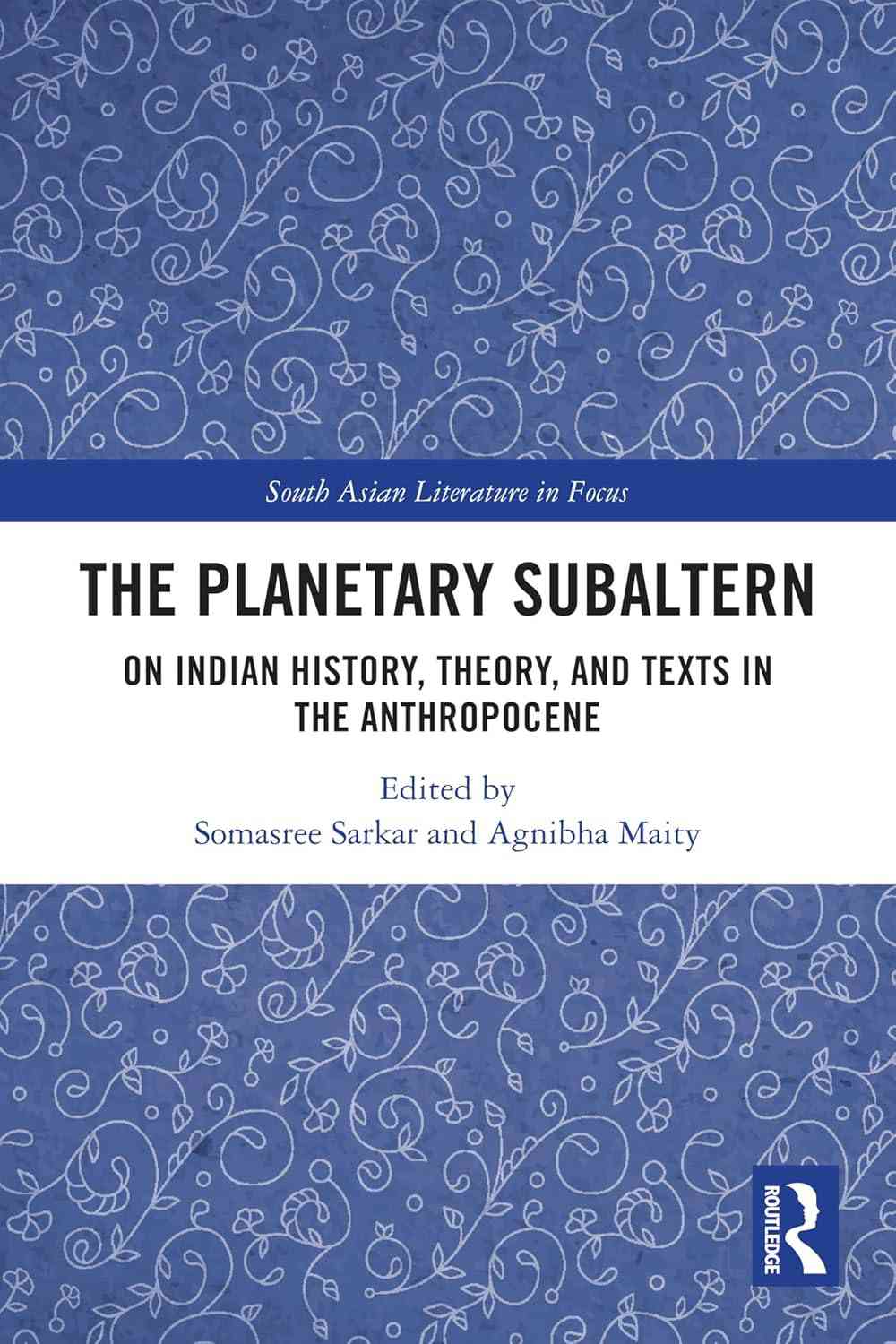
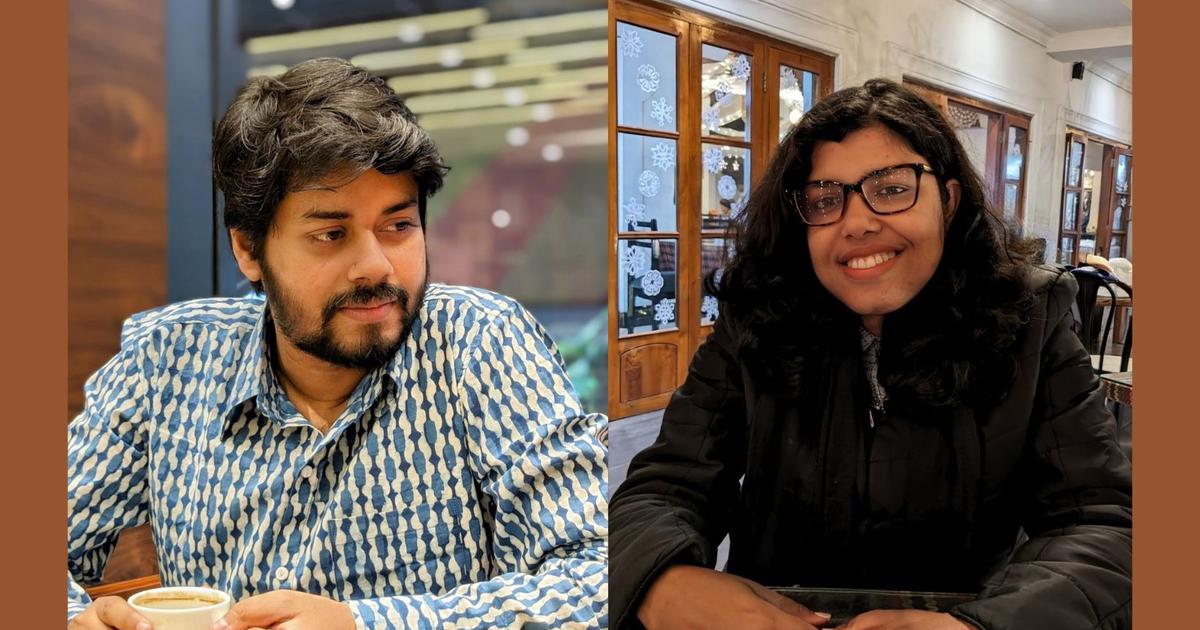
The Planetary Subaltern: On Indian History, Theory, and Texts in the Anthropocene, edited by Somasree Sarkar and Agnibha Maity, tries to bridge this gap. Through essays across several domains – from literary criticism to commentary on the Green Revolution and its enduring violence, the book centres the subaltern in climate discourse, trading the global for the planetary.
I enjoyed reading the insightful text, and I enjoyed conversing with the authors even more. In a conversation with Scroll, the editors talked about their process for curating the book, their hopes and doubts, and how the current climate discourse leaves much to be desired. Excerpts from the interview:
The Planetary Subaltern combines Environmental Humanities with Subaltern Studies. Tell me how the book came together.
Somasree Sarkar (SS): In March 2023, I submitted my PhD dissertation on Euro-American Climate Fiction and analysed selected works of fiction through the theoretical frameworks of the Anthropocene and Extinction Studies. While these novels hold a cautionary significance, I noticed that little attention is paid to the non-Western world and that Western psychology is stuck in distant futuristic scenarios. I felt the need to explore narratives more grounded in real events, especially in South Asia.
That is when I turned to works focused on India based on environmental movements, Indigenous people’s land grabs, climate migrants, resource exploitation, and so on. Such narratives often present cases of the impoverished groups like the Dalits, Adivasis, and other Indigenous groups, who have emerged as the victims of environmental exploitation. At this point, my interests aligned with those of Agnibha Maity’s, as he was already working on Subaltern Studies. We both felt the need to highlight subaltern narratives from India in the context of the current climate crisis and the widely discussed epoch, the Anthropocene.
Agnibha Maity (AM): Our intellectual engagement began even before we started working on the book project. I would say that our shared interest in Dipesh Chakrabarty’s philosophy had played a pivotal role in conceptualising “the planetary subaltern.” Chakrabarty was one of the founding members of the Subaltern Studies Collective, which is my primary research interest, and his publication of the essay, “The Climate of History: Four Theses,” noted a shift in his critical thinking to planetary crisis. Subaltern Studies as a collective has always been invested in recording and retrieving the agency of the marginalised groups since the 1980s.
Later, it expanded its ambit to include thinkers from different parts of the globe. Following this, I naturally became interested in understanding how subalterns are faring in the Anthropocene and what impacts planetary crises have on vulnerable communities. Then, something struck me: how do I bridge the gap between two schools of thought, planetary thinking and subaltern studies? After much debate and discussion, Somasree-di (my senior in the University) and I started working together on the project, looking for possible answers.
How does a postcolonial lens shape your approach to the climate crisis? In what ways does Indian or South Asian history challenge the conventional (often Western) narratives of the Anthropocene?
SS: My answer to this is connected to the previous one. Western perceptions of the climate crisis and its destruction are focused on the future. They often talk more about tomorrow – a distant tomorrow – concerning excessive fossil fuel use, relentless exploitation, and the effects on future generations, which are, of course, important issues that require urgent attention. However, when considering the climate crisis or ecological exploitation within the context of Indian or South Asian history, we can see that what the West projects as the future is, in fact, the present for this part of the world.
It begins with the times of colonial exploitation, forced land grabs of the Indigenous people, mining, chemical pollution, and deforestation. This colonial model is extended with the establishment of the neoliberal economy, which, in a way, allows the economic dominance of the Global North over the Global South. Also, the Anthropocene as a concept is criticised for overlooking the discrepancies among humans. For this reason, it is essential to understand the complexities of climate change and its impacts through a postcolonial lens, which seeks to critique the dominant narratives resembling the Western model and is cognisant of the situations of marginalised groups, who are ignored by the dominant discourses.
AM: Most debates surrounding the Anthropocene revolve around certain Eurocentric biases and contexts that neglect the postcolonial contexts. The “post” in postcolonialism does not indicate the end of colonialism, but an end to a particular mode of exploitation. The environmental history and the attendant politics here in India, therefore, must be essentially different from that of the West.
Postcolonialism emphasises this very difference and discrimination above all else. It highlights the different forms of oppression orchestrated by the capitalist nation-states. The fact that this “uneven development” stands at the core of both postcolonial theory and Environmental Studies is what led us to adopt a postcolonial approach to the current climate crisis.
If the “planetary” risks dissolve human histories into a geological scale, how does the idea of the Planetary Subaltern retain the specificity of caste- and class-based violence rather than depoliticising it?
SS: Dipesh Chakrabarty distinguishes between “globe” and “planet,” yet it is important to understand that the current planetary changes, which are human-induced, connect “globe” and “planet.” While “planetary” does constitute the indifferent geological forces, humans (though unevenly) are recognised as driving forces behind the geophysical changes. This means that the “natural” phenomena, such as earthquakes, tsunamis, or floods, and so on, can no longer be conceived as purely “natural,” because research shows that increased anthropogenic activities, which constitute the “globe,” have accelerated those planetary changes and calamities.
However, humans are disproportionately exposed to planetary changes based on several anthropological factors. This is what our concept of the “planetary subaltern” is trying to address. Having said that, I don’t think it is depoliticising the historical violence of caste; it is addressing how the climate crisis is exacerbating the conditions of the marginalised castes who have already been fighting social discrimination. Since they are already marginalised, their marginality is worsened by their exposure to environmental exploitation, which leads to dual subalternisation.
AM: We have tried to trace the connection between the planet and the globe in our book. We have tried to show how planetary crises emerge from existing global problems, which do not exclude problems related to caste, creed, and so on. Globalisation, historically speaking, is a product of capital-driven imagination, which views the citizens of modern nation-states as consumers and thereby homogenises cultural differences. This entire concept of the globe is currently being strongly challenged by the planetary thinkers. “Planetary,” as we have argued, is a critical-imaginative framework.
It is, at the very least, relational, deeply interconnected, and non-exclusionary. It calls for a radical shift in worldviews. I completely agree with Somasree’s emphasis on a “dual marginalisation” of caste, as those already marginalised due to certain socio-political and economic conditions confront a double trouble in the face of some calamitous environmental event, meeting further levels of subalternisation.
In a context where many human subalterns still struggle for recognition as historical subjects, what are the political stakes of extending “subaltern” to non-human beings, as in many essays? How do you avoid diluting human oppression while making this move?
SS: Excluding the concerns of non-humans from the discussion of subalternisation in the context of planetary crises risks promoting speciesism, which can be understood as adjacent to racism or even casteism. Human-nonhuman entanglements are crucial to the stabilisation of the planetary conditions.
For instance, Sangeetha Balakrishnan’s piece examines the inseparable relationship between the Jarawas of the Andamans and their forests; Paddaja Roy’s writing situates non-human animals as “planetary subalterns” and explores their integral relationship with the Indigenous communities of the North Eastern India; and Rajanya Ganguly explains how the interrelationship between riverine ecologies and Dalit communities on the riverside shape the community’s identity and livelihood. These authors highlight that human-non-human interactions form intricate parts of subaltern (Dalits and Adivasis in this case) existence, emphasising the need to strengthen planetary connections between beings.
AM: Amitav Ghosh, speaking on his new novel, The Ghost Eye, recently pointed out how he supports the “Rights of Nature” movement. Movements like this tend to extend ethical rights to abiotic things, to nature, rivers, forests, and to the ecosystem as a whole. In short, the extension of human rights (let us think of subaltern rights in this regard) to nonhuman animals and other entities does not indicate any sort of elimination; instead, it further reinforces and reconceptualises those rights in the light of a broader canvas. I would say that the ethos of the “planetary” is no different.
The planet, in our theorisation, is a shared space of humans and non-humans, and this “planetary” seeks to include non-human subjects, alongside all facets of human society, which the Western epistemology often so violently overlooks. Also, we know how Indigenous communities in India and even in other parts of the planet are dependent on their ecology, how in many subaltern epistemologies the distinction between spirits and living beings happens to be blurry and often non-existent. The inclusion of plural ways of looking at the planetary beings strengthens the politics of Dalits and Adivasis, and not the other way round.
You reference the “Manthropocene” in your essay, a critique of the Anthropocene as a masculinist narrative. Yet, whether it was Mayilamma or the analysis of the farm laws, we see that subaltern communities themselves are often deeply patriarchal (e.g., the Jat-led farm protests). How do you reckon with this tension, where the subaltern male may also reproduce extractive or gendered power?
SS: This is an interesting question. In my view, the Jat-led farmers’ protest, which Aniket Aga’s essay deals with, does not act as a signifier of a patriarchal tool in this context. I agree that even subaltern male figures can represent “Manthropocene,” as already argued in our chapter on Mayilamma. In Mayilamma’s narrative, many men in her community favoured the soft drink company’s operations and criticised the women who led their movement against the corporate giant.
They even ostracised Mayilamma and sought to stain her character because she was a young widow. “Manthropocene” critiques the Anthropocene from a gendered perspective, arguing that the current epoch’s environmental degradation is largely male-enabled, with women emerging as greater victims. In the case of women belonging to marginalised communities, the sufferings are greater, as they are responsible for maintaining the domestic health and hygiene, which are highly compromised when exposed to a toxic environment. Like, in the chapter on Environmental Reproductive Justice, Angela Sebastian emphasises how female bodies are affected by the endosulfan toxification.
Many essays in the collection turn to folklore, spirits, and other non-Western ecological imaginaries. In today’s politically charged climate, with the regular harkening back to “tradition” and “ancient knowledge,” how does one reclaim these narratives without allowing them to slide into nationalist or civilisationalist readings?
SS: Folklore often mirrors a society’s belief system and suggests how a community has evolved over the ages. Folklore is never consistent; it is passed down through generations, with different versions. What we find in folklore from diverse parts of India is ecological consciousness. This environmental consciousness has eradicated with the so-called modernisation of society.
Writers like Amitav Ghosh have incorporated folklore and mythological tales into their works to evoke ecological consciousness among contemporary readers and to demonstrate that these tales can be viewed as parables of modern times. These narratives have existed long before the idea of the nation emerged as a political concept.
AM: This allegation is not exactly new. The Guha-led Subaltern Studies group had also been accused by left-leaning academicians of eventually strengthening the right-wing propaganda of looking back to the past. However, the point is that the right’s idea of the past is a monolithic one, and it champions some Hindu Brahminical ideologies. The planetary dialogue, on the contrary, is both relational and pluralistic without any form of depoliticisation.
It looks into the archive of folklore and marginalised oral literature to find new alternatives for staying in harmony with nature. The ecological imagination of the subalterns we are writing about is pre-national (or, you can also say, post-national in a futuristic way sometimes). Like Somasree, I would emphasise that the narratives that our books look at incorporate folklore and myth that have existed far earlier than the modern concept of the “nation” came into being.
In these essays, “development” is consistently framed as violence. Given that many subaltern groups desire material development (roads, electricity, jobs), how do you ethically theorise against “development” without condemning the subaltern to a romanticised poverty?
SS: This is an important question. I have often pondered whether the book falls into the trap of romanticising poverty or if the essays seem to promote anti-development. Though roads, bridges, and electricity might be essential for the so-called modernisation of their living, their primary concerns have been jal and zameen, on which their existence largely depends. Several developmental projects, such as the mega dam projects like the Sardar Sarovar Dam across the Narmada, the establishment of a Coca-Cola factory at Plachimada, the mining industries in Odisha, and the use of endosulfan in Kerala, all indicate a common pattern.
The observation of the pattern reveals a lack of investigation at the ground level, a lacuna in assessing the environmental impact on the region of their operation, and the forcible marginalisation of the people. Unfortunately, when the nation is projected, these people’s struggles, loss of homes, and sacrifices are sidelined and glossed over. They barely receive the promised; instead, they are rendered homeless in their homeland. This is something similar to what Dipesh Chakrabarty acknowledges as the “difficulty of being modern” in a postcolonial society, as “modernity” is usually conceptualised in Western terms of teleological progress.
AM: For me, this is a philosophical question that connects us to a broader question: how to stop this climate catastrophe or massive biodiversity loss in today’s world. Is building a road in a dense mangrove area in the Sundarbans ecologically just? How do we justify the proposal of cutting down 45,000 mangrove trees for the coastal road along the Manori creek? Should we look into the immediate future and be equal with the first-world countries in terms of high-rise buildings or mega malls? Or, should we fundamentally challenge this notion of “development’ in the first place?
Recently, there have been scholarly debates surrounding “degrowth” in the fields of economics and the social sciences, which subvert the very philosophical bases of the resource-intensive development model followed by the West for so long! It is time for us to listen to the grasshoppers, then, perhaps. Not only do we need to learn from forest-dwellers and riverine commons, but also from the non-human animals who silently bear the burden of our greed and hunger; we need to know how they live in the world without harming the ecology.
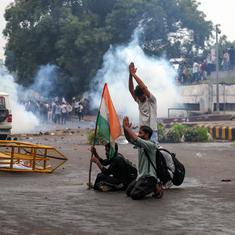
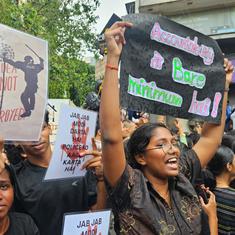
Your Introduction mentions the Chipko movement and Narmada Bachao Andolan as historical anchors. Today, when environmental dissent in India is being criminalised, how do you see the future of “Planetary Subaltern” scholarship in an era when defending the right to a dignified life is branded as “anti-national” sedition?
SS: Honestly, if you look at the archives of social movements, you will notice that environmental dissent, or any form of dissent, has always been considered “anti-national”, and there have been several attempts to curb those movements. I am not sure if our project will be labelled as an “anti-national sedition”. I would still like to believe academia is a space that allows a free dialogue. Also, our book refrains from labelling a specific political group as an enabler of violations; it highlights the functioning of a neoliberal state, which in many ways resembles the colonial model of functioning.
AM: I have a slightly different opinion. In India, even in academia, we witness a gradual disappearance of dissent. We cannot really label academics as vanguards of the masses these days, can we? Academia, too, is politically charged and vested in diverse interests. As you mentioned, we all know what happened to the many activists of the Narmada Bachao Andolan. They ended up in jail. That is the case with every other environmental movement in India. Do you think that the future of “Aravalli Virasat Jan Abhiyan” will be any different?
What do you hope readers ultimately take away from The Planetary Subaltern? Beyond critique, what new forms of research, solidarity, or action do you want this work to enable?
SS: I would want the concept of “the planetary subaltern” to percolate into academic discussions and attract the attention of planetary thinkers. The concept can be accepted and critiqued. Of course, it can be extended for future research. One way the idea can be furthered is by exploring a decolonial perspective. How can narratives of subalternisation or Subaltern Studies open space for decolonising the Anthropocene?
AM: Academically, this book is part of a larger school of planetary studies today and contributes to the discussion on how narratives of subaltern communities can form a significant part of it. We had presented some of the case studies, but there are plenty that are yet to be explored. I want this book to reach the hands of the environmental activists. I hope it serves as a call for a planetary solidarity of academics and activists, and to reimagine a future where the spring is not silent!